


What Cosmetic Rhinoplasty May Address
Patients come to consultations with a wide range of concerns. The most common include:
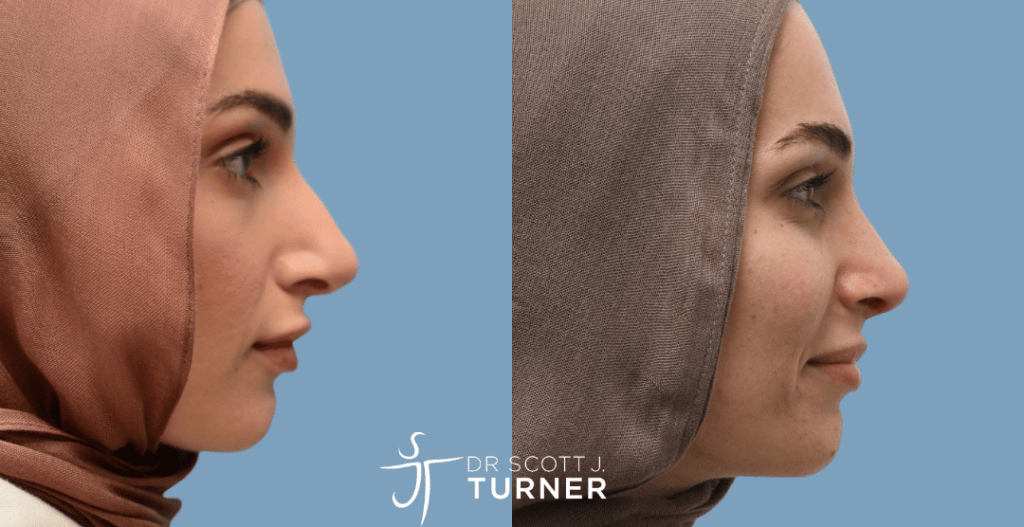
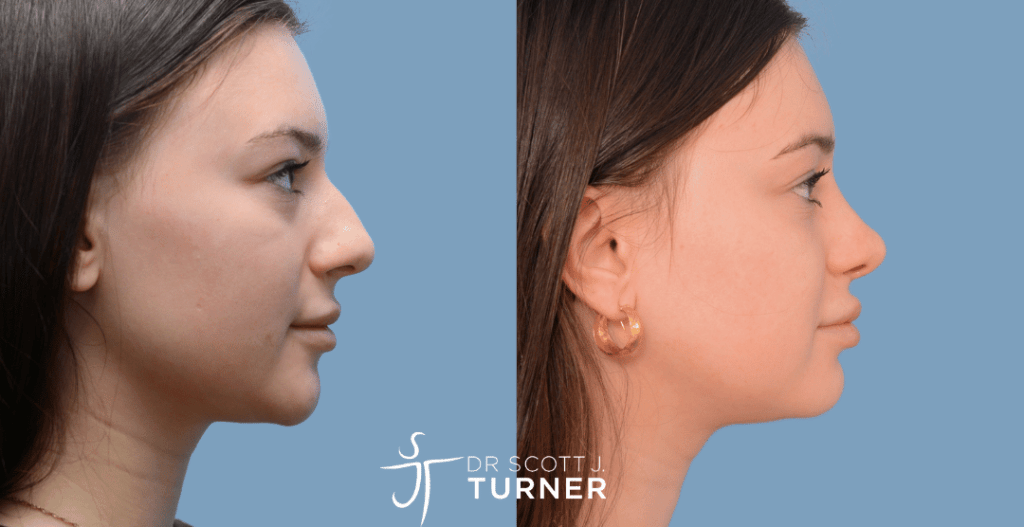
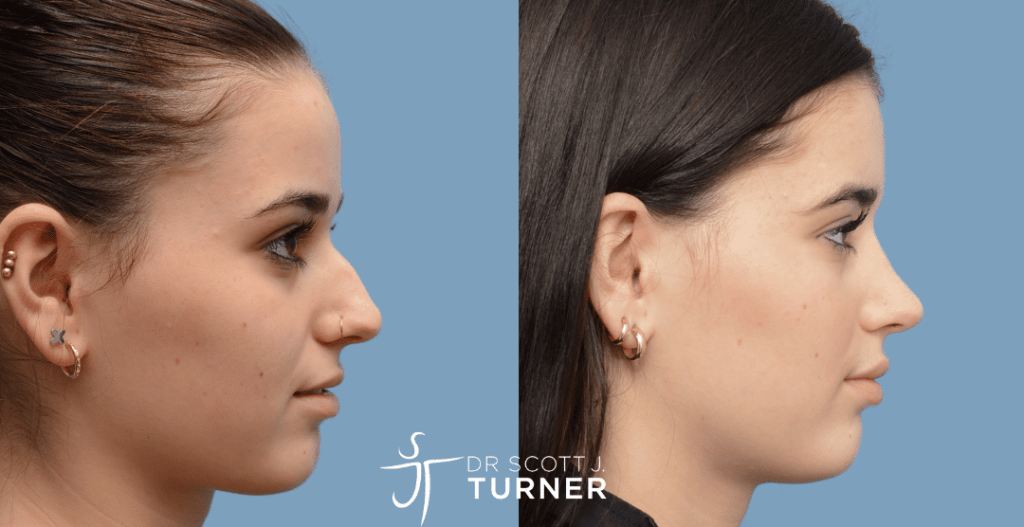
Dorsal hump. A bump or ridge along the bridge of the nose, often the most visually prominent issue. Reduction involves controlled removal of bone and cartilage, typically followed by osteotomy to narrow the nasal bones and close the open roof that results.
Nasal tip. A bulbous, drooping, pinched, or asymmetric tip can be reshaped through careful cartilage adjustment. Tip work is one of the more technically nuanced parts of rhinoplasty. Precision matters here. Over-resection and aggressive reshaping are among the most common reasons revision surgery is later needed.
Nose size and width. A nose that appears too large or too wide for the rest of the face. Reduction rhinoplasty addresses overall proportion while keeping the character of the nose intact.
Bridge width and nasal bones. Wide nasal bones can be narrowed using controlled osteotomy, usually as part of broader reshaping rather than as an isolated change.
Post-traumatic deformity. Structural changes following a broken nose, including deviation, collapse, or irregular contour. These cases often have both cosmetic and functional elements that need to be planned together.
Nostril shape and width. Disproportionate or flared nostrils can be reduced through alarplasty, which targets the alar base. Sometimes performed as part of rhinoplasty, sometimes as a standalone procedure.
Ethnic rhinoplasty. Nose surgery planned with cultural identity and the specific structural characteristics of different ethnic backgrounds in mind. See ethnic rhinoplasty for a fuller discussion.
Revision rhinoplasty. Surgery to address the outcome of a previous procedure. Among the most technically demanding work in plastic surgery. See revision rhinoplasty for more.
Open vs Closed Rhinoplasty
The choice between open and closed rhinoplasty comes down to what the surgery needs to do.
Closed Rhinoplasty
All incisions sit inside the nostrils. No external scar. Closed technique suits less complex cases: modest tip adjustments, smaller dorsal reductions, internal changes that do not require direct external access to the nasal structure. Less dissection generally means a slightly faster early recovery.
Open Rhinoplasty
A small incision is made across the columella (the strip of tissue separating the nostrils), allowing the nasal skin to be lifted and the underlying anatomy worked on directly. Open rhinoplasty is the approach for more complex cases: significant tip reshaping, structural correction, cartilage grafting, or revision work where prior surgery has altered the anatomy.
The columellar scar is small and generally fades well over time, though healing varies between individuals. Dr Turner will recommend the appropriate approach at consultation. In some complex cases, the final decision is confirmed during surgical planning rather than at the initial appointment.
Dr Turner’s Approach to Rhinoplasty
Rhinoplasty technique has shifted considerably over the last decade. The older “reduce and refine” mindset has given way to a structure-preserving approach where possible. Removing cartilage and bone is the straightforward part. Reshaping the nose while preserving its structural integrity is much harder, and where modern rhinoplasty differs most from earlier practice.
Preservation where possible. Where suitable, preservation rhinoplasty maintains the dorsal anatomy while modifying the profile, rather than excising and rebuilding. This can reduce the risk of certain longer-term complications associated with over-resection.
Whole-nose planning. The nose works as a single structure. Tip changes affect how the bridge reads, and bridge changes affect how the tip reads. Dr Turner plans the operation with the whole nose in view, and in relation to the rest of the face, rather than treating each concern in isolation.
Digital imaging as a planning tool. Imaging may be used during consultation to support the conversation about goals. It is a communication aid, not a prediction. The eventual outcome depends on anatomy, cartilage quality, skin thickness, and how the individual heals.
Honest expectation setting. Not every concern can be fully addressed surgically. Where surgery is unlikely to achieve what a patient is hoping for, Dr Turner says so directly. It can be uncomfortable to hear, but it is the basis of a good surgical relationship and avoids the dissatisfaction that drives revision surgery later.
To see results from previous patients, visit the rhinoplasty before and after gallery.

Cosmetic vs Functional Rhinoplasty
Cosmetic rhinoplasty changes how the nose looks. Functional rhinoplasty changes how it works, specifically nasal breathing and airflow.
Some patients have both concerns. Where appropriate, both can be addressed in the same operation, a combination known as septorhinoplasty. Combining the two is usually more efficient than two separate operations, with a single recovery period, though the surgical plan is more complex.
Functional rhinoplasty and septoplasty may attract a Medicare rebate where clinical eligibility criteria are met. Cosmetic rhinoplasty does not. For more, see functional rhinoplasty.
Are You a Suitable Candidate?
Cosmetic rhinoplasty may be appropriate if you:
- Are in good general health with no conditions that significantly increase surgical risk
- Have fully developed nasal anatomy, typically from the mid to late teens, though this varies between individuals
- Have specific, clearly articulated concerns about the appearance of your nose
- Have realistic expectations about what surgery can and cannot achieve
- Understand that the final result takes time to develop, typically around twelve months as swelling fully resolves
Rhinoplasty is not appropriate for everyone. If surgery is unlikely to meet your goals, or your expectations are not aligned with what your anatomy permits, Dr Turner will tell you so during the consultation process.
If you are under 18, see teen rhinoplasty for the additional assessment considerations that apply.
The Consultation and Surgical Process
The process for cosmetic rhinoplasty is set in part by the Medical Board and AHPRA requirements for cosmetic surgery, which came into effect on 1 July 2023. The steps below apply to every patient.
Step 1. GP referral. A referral from your GP or a specialist physician is required before the first consultation.
Step 2. First consultation. Dr Turner examines your nasal anatomy internally and externally, discusses your concerns and goals, and outlines what surgery may involve in your specific case. Digital imaging is sometimes used as part of this conversation. The consultation fee is $450.
Step 3. Psychological evaluation. A formal psychological assessment is required to confirm suitability for cosmetic surgery, under the same regulatory framework.
Step 4. Second consultation and cooling-off period. A minimum of two consultations must take place before surgery is booked, and a mandatory cooling-off period applies before formal consent is given. These requirements exist to protect patients and cannot be bypassed.
Step 5. Pre-operative preparation. Once the surgical plan is confirmed and all requirements are met, detailed pre-operative instructions are provided. Smoking cessation well in advance of surgery is essential. Nicotine significantly affects wound healing and the surgical outcome.
Step 6. Surgery. Rhinoplasty is performed under general anaesthetic at Bondi Junction Private Hospital or Delmar Private Hospital in Dee Why, typically as a day procedure or with one overnight stay depending on the complexity of the case.
Recovery
Rhinoplasty recovery follows a broadly predictable timeline, though individual experience varies.
- Week 1. A nasal splint is worn. Bruising and swelling are at their peak. Rest is the priority.
- Weeks 2 to 3. The splint is removed. Most visible bruising resolves. Many patients feel ready to be in public at this point.
- Weeks 4 to 6. Residual swelling continues to settle. Return to light activity is generally possible.
- Months 3 to 6. The nose continues to refine. Tip definition becomes clearer.
- 12 months. Final result. The nose is fully settled and any deeper residual swelling has resolved.
Strenuous activity, contact sports, and anything that risks impact to the nose should be avoided for at least six weeks. Individual healing varies. Skin thickness, surgical complexity, and how the body responds all affect the timeline. Thicker skin takes longer to show the full refinement of the underlying surgical work.
Risks and Complications
Rhinoplasty is major surgery and carries specific risks that every patient should understand before proceeding. These include:
- Bleeding during or after the procedure
- Infection
- Adverse reaction to anaesthesia
- Scarring, particularly with open rhinoplasty, though the columellar scar typically fades well
- Asymmetry or surface irregularities
- Changes to skin sensation, including temporary or longer-lasting numbness
- Altered nasal airflow. Cosmetic changes can in some cases affect breathing
- Unsatisfactory cosmetic outcome. Results are influenced by skin quality, cartilage characteristics, and individual healing
- Septal perforation. Rare, but possible
- Need for revision surgery. A proportion of rhinoplasty patients require secondary correction
Dr Turner will discuss the risks most relevant to your anatomy and surgical plan at consultation.
Rhinoplasty Cost in Sydney
Cost varies according to the complexity of the case, the surgical approach, the anaesthetic and hospital fees, and whether functional components are involved. Cosmetic rhinoplasty is not covered by Medicare. For a detailed breakdown of pricing, including tip rhinoplasty, full cosmetic rhinoplasty, septorhinoplasty, and revision rhinoplasty, see the rhinoplasty cost guide for Sydney patients.
Related Procedures
- Functional Rhinoplasty, nose surgery for breathing and airflow
- Septoplasty, correction of a deviated septum
- Revision Rhinoplasty, secondary surgery following a previous procedure
- Ethnic Rhinoplasty, rhinoplasty planned with cultural and structural considerations
- Alarplasty, nostril reduction and reshaping
- Broken Nose Treatment, repair of post-traumatic nasal deformity
- Teen Rhinoplasty, rhinoplasty for patients under 18
Frequently Asked Questions
How long does rhinoplasty recovery take?
Most patients feel comfortable returning to public-facing activities within two to three weeks, once visible bruising and swelling have resolved and the nasal splint is removed at around day seven. Desk-based work is generally possible within two weeks, depending on the individual and the complexity of the surgery. Strenuous exercise and any activity that could risk impact to the face should be avoided for at least six weeks. The nose continues to refine throughout the first year. What you see at six weeks is not the final result. Tip definition in particular continues to improve as deeper swelling settles, and individual healing varies considerably.
What is the difference between open and closed rhinoplasty?
Closed rhinoplasty places all incisions inside the nostrils, with no external scar. It is suited to less complex cases. Open rhinoplasty involves a small incision across the columella, giving direct visibility of the underlying nasal structure. Open technique is typically the approach for complex reshaping, cartilage grafting, or revision cases where the anatomy has been altered by previous surgery. Both approaches can produce excellent results when used in the right clinical context. Dr Turner will recommend the appropriate approach for your case at consultation.
When will I see my final rhinoplasty results?
The short answer is around twelve months. Visible swelling resolves within two to three weeks. Deeper swelling, particularly in the nasal tip, takes considerably longer to settle. Patients with thicker skin notice that refinement appears more slowly. Significant improvement is usually visible by three to six months, but the fully settled result is not apparent until around the twelve-month mark. Dr Turner will give you a realistic picture of the expected timeline for your specific case during consultation.
What is the difference between cosmetic and functional rhinoplasty?
Cosmetic rhinoplasty changes the appearance of the nose: shape, size, bridge profile, tip definition, and overall proportion. Functional rhinoplasty addresses structural problems affecting nasal breathing, such as nasal valve collapse or turbinate hypertrophy. Septoplasty specifically addresses a deviated septum. Both can be combined in the same operation where both concerns are present. Functional procedures may attract a Medicare rebate where eligibility criteria are met. Cosmetic rhinoplasty does not. See functional rhinoplasty for the full explanation.
How do I know if I am a suitable candidate for cosmetic rhinoplasty?
Suitability is assessed at an in-person consultation. Dr Turner considers your overall health, your nasal anatomy (including skin thickness, cartilage quality, and structural proportions), the specificity of your concerns, and whether your expectations align with what your anatomy can deliver. Nasal anatomy should generally be fully developed before cosmetic rhinoplasty is undertaken, typically by the mid to late teens. Under the Medical Board and AHPRA requirements for cosmetic surgery, a formal psychological evaluation is also required before surgery can proceed. If surgery is unlikely to meet your goals, Dr Turner will say so honestly rather than proceed.
Where does Dr Turner perform rhinoplasty surgery in Sydney?
Consultations are held at the Bondi Junction clinic at 39 Grosvenor Street and the Manly clinic at Suite 504, Level 5, 39 East Esplanade. Cosmetic rhinoplasty surgery is performed at Bondi Junction Private Hospital and Delmar Private Hospital in Dee Why. The choice of hospital depends on the surgical plan and individual circumstances, and is confirmed during the consultation process.
What does the rhinoplasty consultation process involve?
The process for cosmetic rhinoplasty is set by the Medical Board and AHPRA requirements for cosmetic surgery, which took effect on 1 July 2023. A GP referral is required before the first consultation. A minimum of two consultations with Dr Turner must take place, with a mandatory cooling-off period before formal consent is given. A psychological evaluation is also required to confirm suitability. The consultation fee is $450. Dr Turner uses these consultations to examine your anatomy, discuss your goals, outline what surgery may involve in your case, and confirm whether the operation is appropriate for you.
Does Medicare cover rhinoplasty in Australia?
Cosmetic rhinoplasty is not covered by Medicare. Where rhinoplasty includes a functional component that meets documented clinical criteria, such as correction of a deviated septum causing meaningful nasal obstruction, a partial rebate may apply. The relevant item numbers include 41671 for septoplasty and 45641 or 45644 for total rhinoplasty performed for functional indications. A GP referral and documented clinical criteria are required. Anaesthesia and hospital fees remain out-of-pocket regardless of Medicare eligibility, and a gap payment is typically expected even where a rebate applies. For a full discussion, see the rhinoplasty cost guide for Sydney patients.
Consult with Dr Scott J Turner in Sydney
Dr Turner consults at the Bondi Junction clinic (39 Grosvenor Street, Bondi Junction) and the Manly clinic (Suite 504, Level 5, 39 East Esplanade, Manly). Cosmetic rhinoplasty surgery is performed at Bondi Junction Private Hospital and Delmar Private Hospital in Dee Why.
Contact the practice to arrange a consultation, or read more about Dr Turner’s training and approach.
